12th-Century Sculptors Depict Ganesha in Unusual Forms
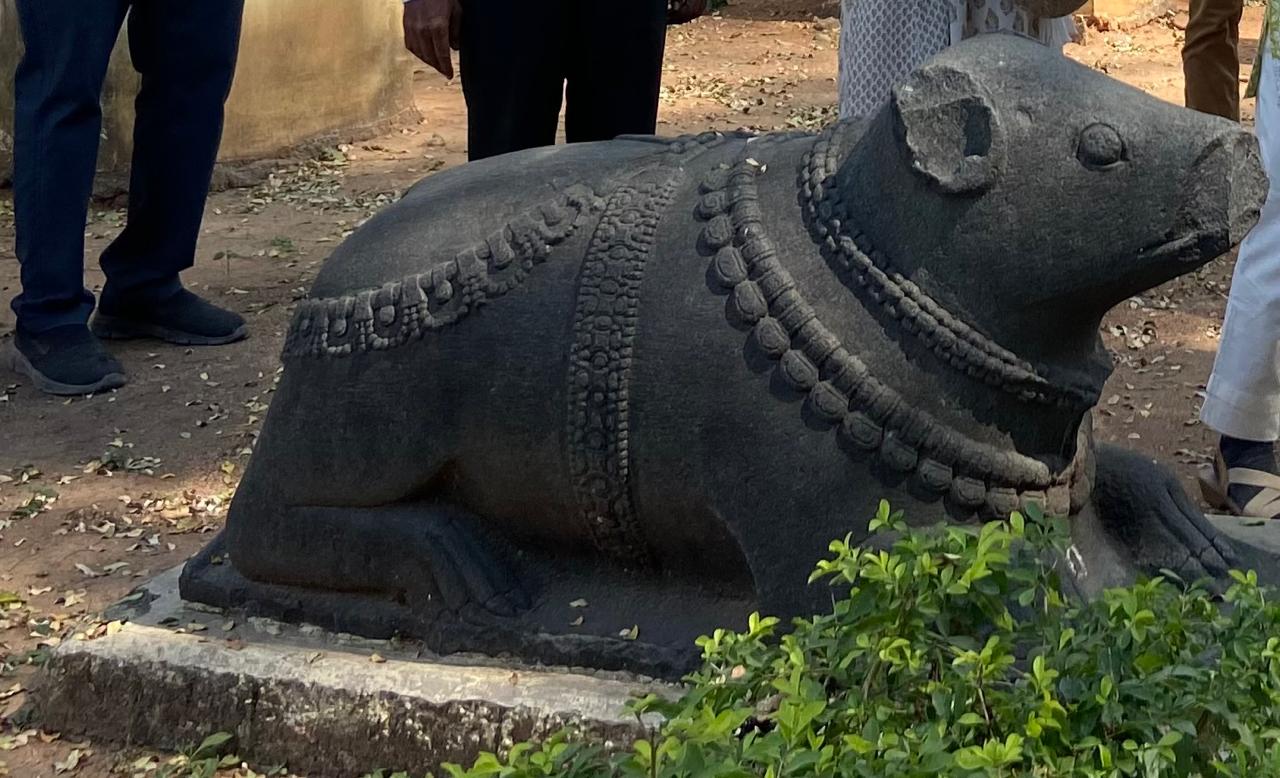
Typically Ganesha is shown seated or dancing, yet a handful of 12th‑century stone carvings from Andhra Pradesh portray the deity in a dynamic, combative pose. \n\nAt Pachchala Someshwara Temple in Panagal, Nalgonda district, a striking figure of Ganesha is locked in battle with the demon Durasada, echoing an episode from the Ganesha Purana where the god slays the monster and his retinue. The temple itself dates to the Chola‑Kanduru dynasty of the 12th century. \n\nParallel motifs appear on the central pillars of the Chennakesava Temple in Macherla and the Sitarama Temple in Sattenapalli, suggesting a regional artistic program that emphasized Ganesha’s martial aspect. \n\nEqually rare is a three‑foot‑long sculpture of Ganesha’s rat vehicle, now displayed in the open‑air courtyard of the Pangal Archaeological Museum. Recovered in 1987 after being hidden in a canal alongside a massive Ganesha figure, the rat statue measures 3 ft long, 2 ft high and 1.5 ft wide—dimensions that make it unique in South India. \n\nArchaeologists regard these works as exceptional examples of Cholas of Kanduru iconography, expanding our understanding of how the deity was visualized beyond the familiar tranquil forms.