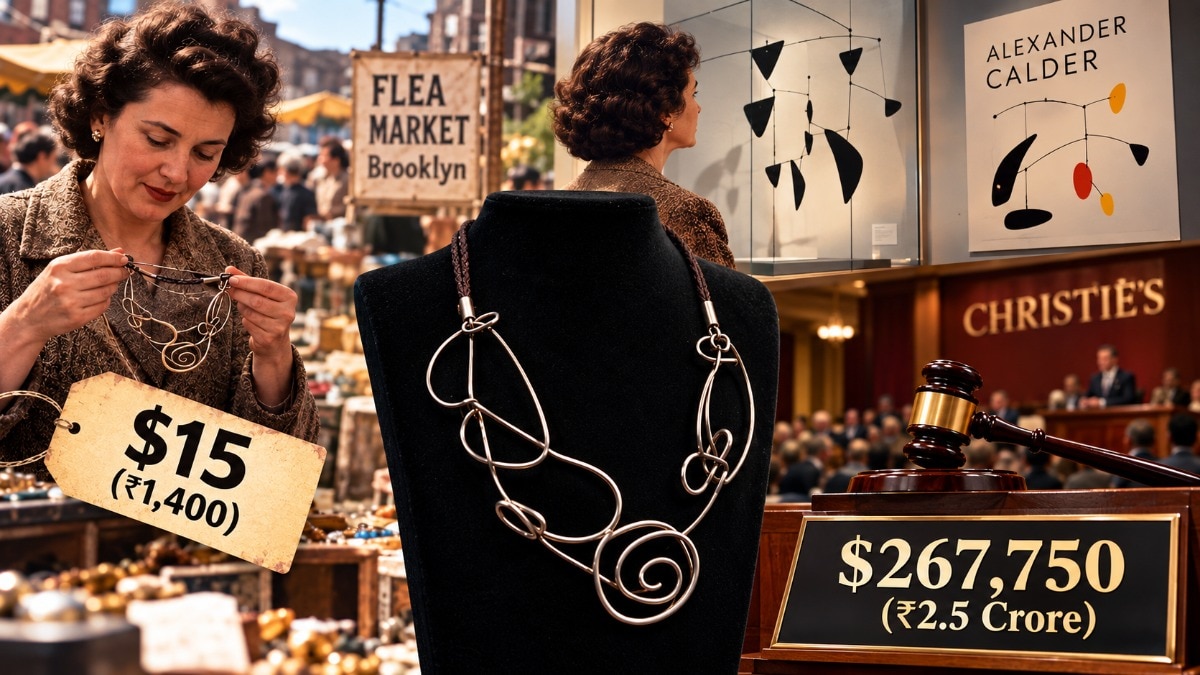
A ₹1,400 flea market find became a ₹2.5 crore masterpiece 70 years later. Here’s why
In 1940 Alexander Calder experimented with wearable art, creating delicate pieces of silver wire and cord. One such necklace, unassuming in its design, resurfaced decades later as a rare example of his jewelry.
The piece entered the market in the 1950s when Norma Ifill, a Philadelphia resident, spotted it at a Brooklyn flea market and bought it for about $15. She wore it as a vintage accessory, unaware of its provenance.
The turning point came when Ifill visited an exhibition of Calder’s jewelry at the Philadelphia Museum of Art and recognized the necklace’s signature twists. Subsequent expert authentication confirmed it as an original Alexander Calder work, catalogued by Christie's as Untitled (Necklace).
At Christie's September 2013 open sale of post‑war and contemporary art in New York, the necklace fetched $267,750, roughly ₹2.5 crore, comfortably within the pre‑sale estimate. The sale underscored the hidden value that can lie in modest objects and highlighted the growing collector interest in Calder’s wearable sculptures.