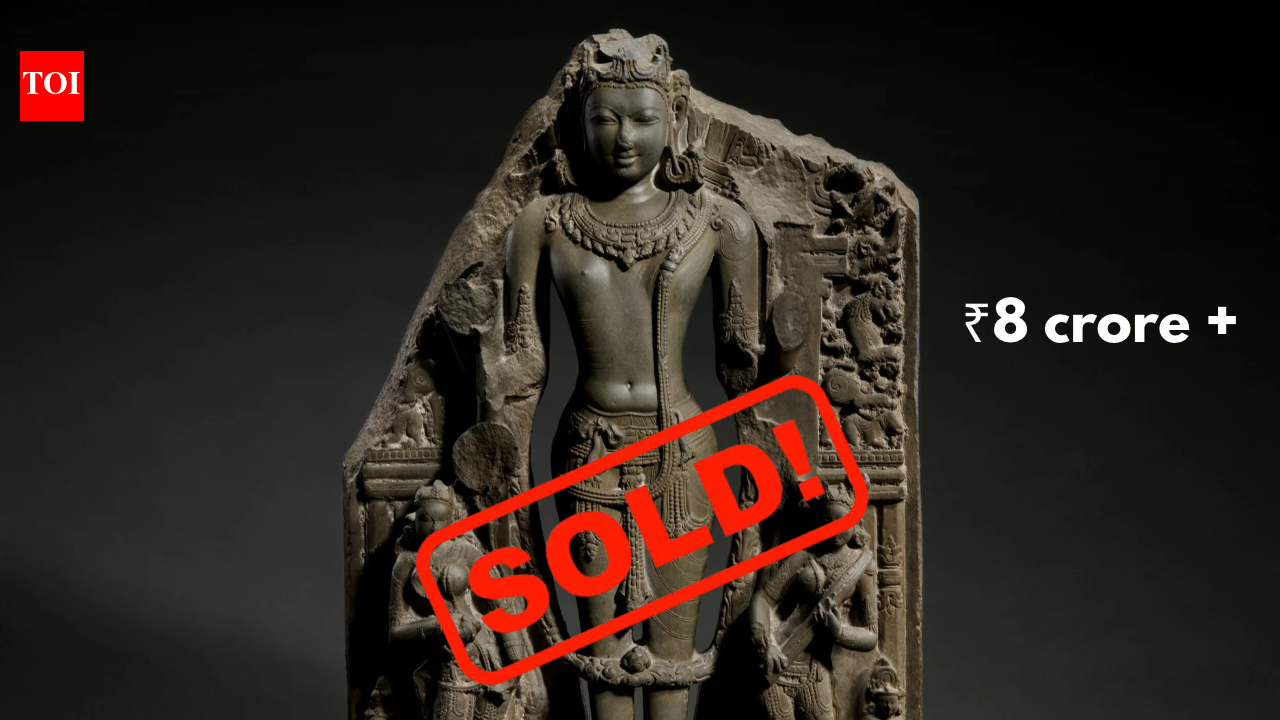
An 11th-12th-century Vishnu sculpture from India's Pala era entered a Swiss collection, sold at a 1973 auction and stayed with its buyer for 53 years before fetching Rs 8.16 crore, over nine times the
An exquisitely carved blackstone stele of Vishnu emerges from the Pala tradition of northeastern India, dating to the 11th‑12th century. Standing just over a metre tall, the work captures the deity’s serene visage, delicate jewelry and a flowing sash, while the surrounding panels hint at a rich narrative populated by Lakshmi, Saraswati, and mythic creatures such as a vyala and makara.
The piece entered the Western market through the René Jaquerod collection in Zurich and was first offered at a Christie’s London sale in March 1973. Its buyer kept the sculpture for more than five decades, a rarity in a market where objects often change hands quickly. When it resurfaced in June 2026 as part of the “Sublime Shadows: South Asian Art from a Distinguished Collection” sale, it commanded £635,000—more than nine times the high estimate and roughly Rs 8.16 crore.
Beyond the headline price, the stele illustrates the technical virtuosity of Pala artisans. The finely rendered facial features, the subtle modeling of the dhoti and belt, and the intricate low‑relief motifs on the back panel demonstrate a sophisticated grasp of human anatomy and decorative symbolism. Even the missing fragments speak to the sculpture’s age and the challenges of preserving such heritage.
The sale underscores a growing appetite for South Asian antiquities among global collectors, especially pieces that combine historical depth with exceptional craftsmanship. It also highlights how a well‑documented provenance, anchored by a respected Swiss collection, can enhance confidence and drive competitive bidding at major auction houses.