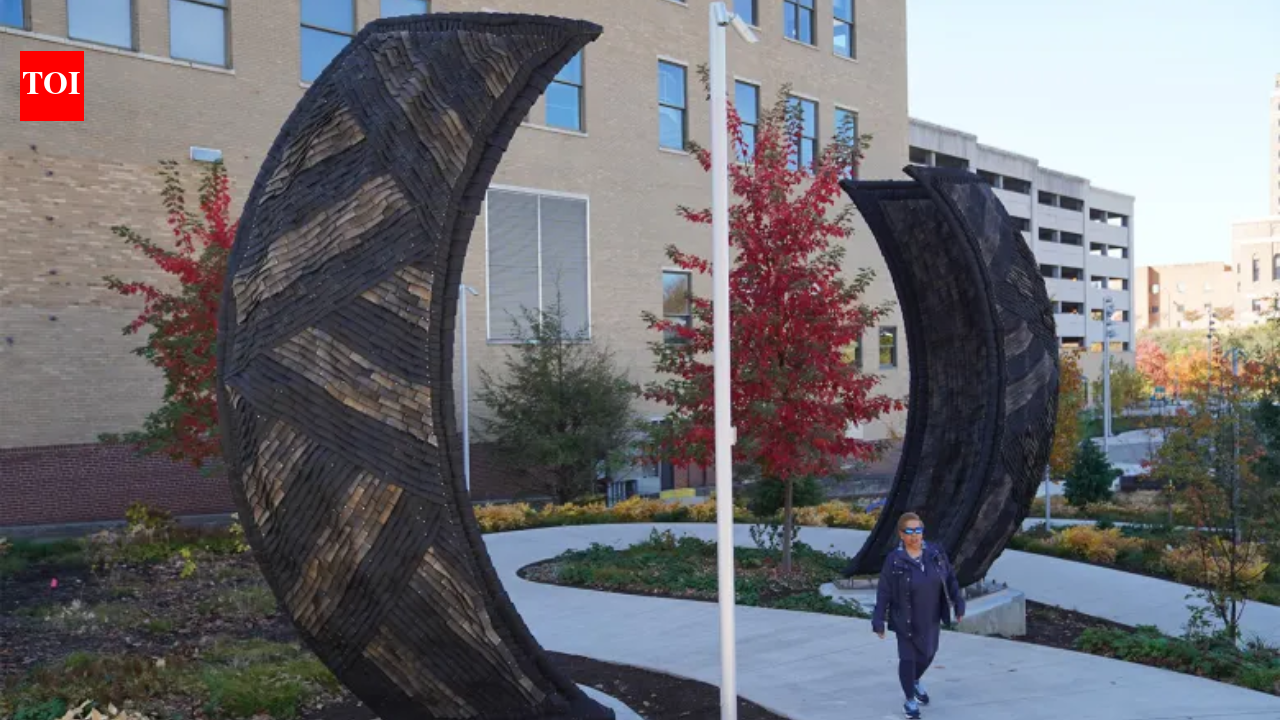
Discarded racing tyres have become a 17-foot-tall sculpture at an Ohio park, where artist Chakaia Booker unveiled her new work in October 2026, turning racing waste into a public landmark
Chakaia Booker's new sculpture Transit rises 17 feet above the grassy expanse of Lock 3 park in Akron, Ohio, turning a pile of discarded Goodyear racing tyres into a striking public landmark. The work’s twin crescent forms are sheathed in overlapping rubber shingle‑like panels, anchored by a stainless‑steel skeleton that gives the piece both heft and elegance.
The choice of recycled tyres is a direct nod to Akron’s identity as the historic Rubber Capital. By repurposing racing rubber that once powered high‑speed competition, the sculpture bridges the city’s industrial past with a forward‑looking cultural agenda, while subtle details—such as original tyre labels—whisper the stories of the workers who produced them.
Chakaia Booker, a New Jersey‑born artist who has built a four‑decade career around transforming waste into textured sculpture, first experimented with tyres in the 1980s. From wearable pieces to monumental installations, her practice has consistently explored the poetic potential of discarded rubber, and Transit marks the latest evolution of that inquiry.
As the first major outdoor work by a woman artist in Akron’s contemporary public art program, the sculpture signals a growing commitment to diversity and to embedding art within everyday civic life. City officials and local patrons see the piece as a catalyst for visitors to linger along the Ohio & Erie Canal, enriching the revitalized downtown corridor that has been reshaped by recent park renovations.
At a cost of roughly $550,000, Transit stands as both a visual anchor and a sustainable statement, proving that materials once destined for landfill can become enduring symbols of community identity.