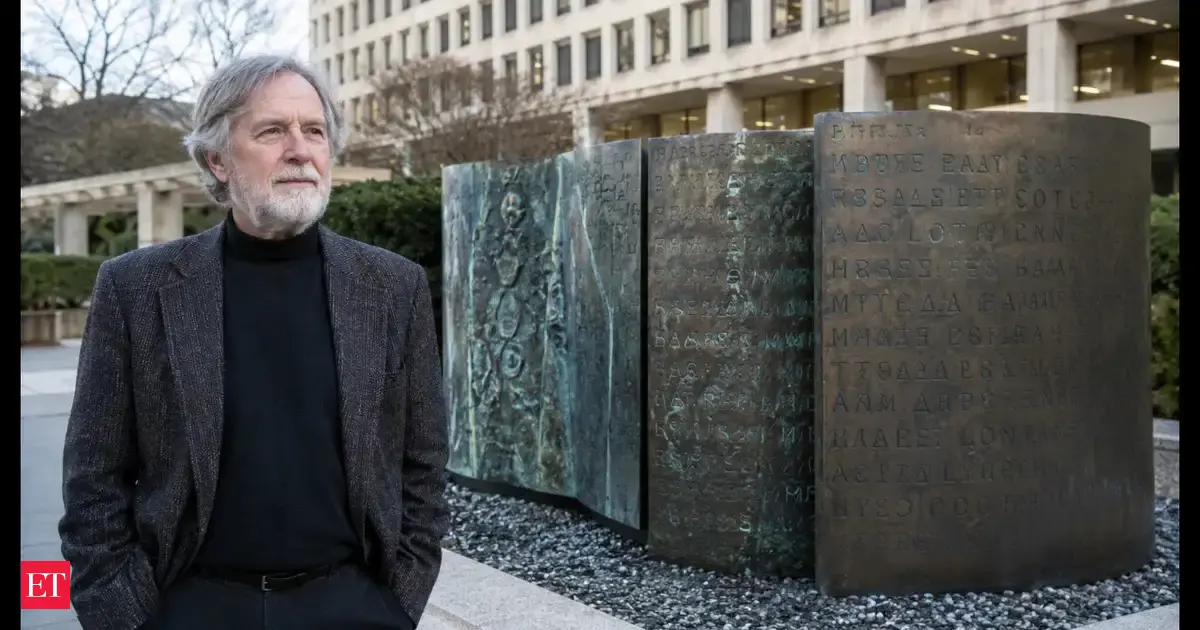
In 1990, Jim Sanborn installed Kryptos with 4 encrypted sections at CIA headquarters. 36 years later, its final section remains unsolved despite decades of codebreaking
Jim Sanborn installed a curved copper screen called Kryptos on the CIA campus in 1990, blending sculpture with a secret code. The work sits between the agency’s original and new headquarters, framed by granite, a reflecting pool and petrified wood, inviting viewers to contemplate both its material presence and the mystery it holds.
The copper plate bears 1,735 letters divided into four sections. The first three have been decoded, revealing references to Egyptian tombs, coordinates and a poetic narrative. Their solutions turned a decorative pattern into a genuine cryptographic message, confirming that the artist intended a functional puzzle as part of the artwork.
The fourth segment, known as K4, consists of 97 characters that have resisted all attempts. Unlike the earlier sections, its solution seems tied to subtle clues in the surrounding environment, making the cipher as much a piece of the sculpture’s landscape as a code on metal.
Kryptos endures because it sits at the crossroads of art, intelligence and public participation. Its creator is known, the location is public, and three of the four parts have been solved, giving solvers a concrete framework while leaving a tantalizing gap. Each new attempt adds a layer to the sculpture’s story, turning the unsolved text into an integral part of the piece’s identity.
After more than three decades, the work remains a rare example of an artwork that lives as much in the minds of codebreakers as in its physical form, reminding us that mystery can be sculpted in copper and that the pursuit of a hidden message can become the work’s most enduring legacy.