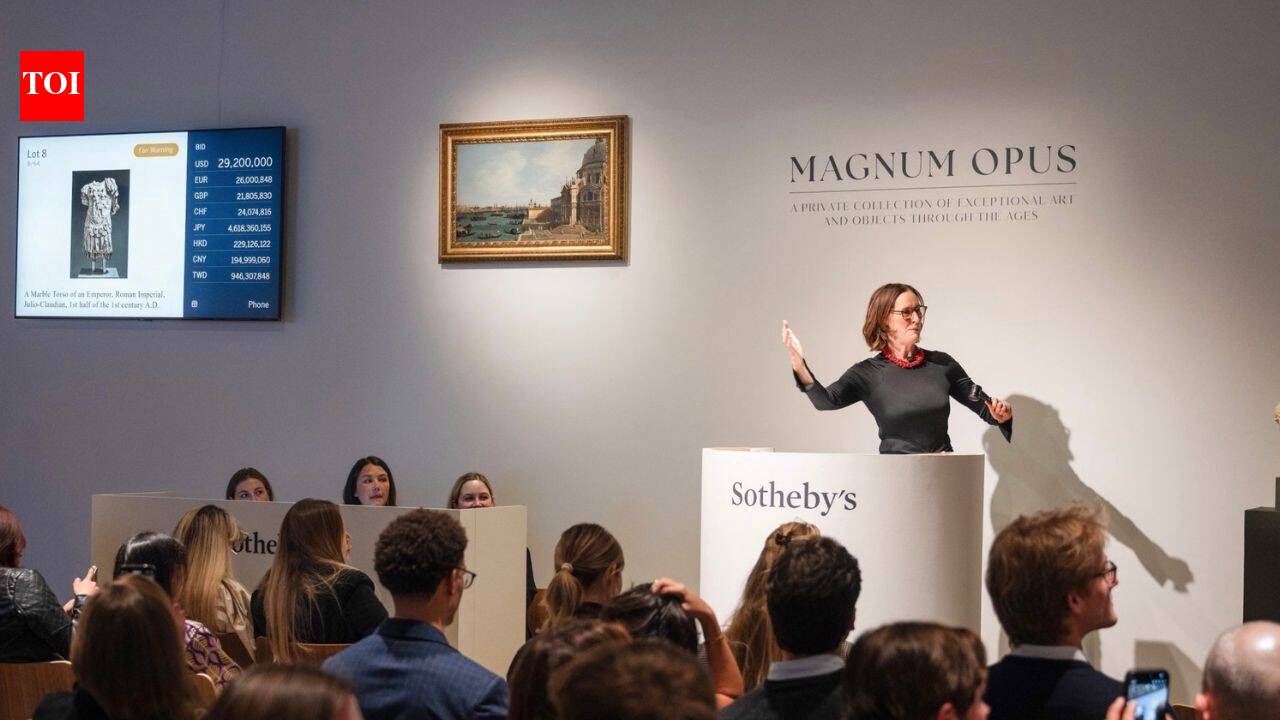
In 2010, a collector paid $7.36 million for a 2,000-year-old Roman emperor's marble torso; after years on display at major US museums, the headless sculpture sold in New York for $34.26 million in Oct
An almost 2,000‑year‑old marble torso, stripped of its head, has become one of the most coveted pieces of Roman antiquity. Dating to the first half of the 1st century AD, scholars speculate it may depict Augustus, Tiberius or Claudius, its breastplate adorned with a sun‑god chariot, Victory figures and floral motifs. The work originates from the ancient city of Salona (modern Croatia) and is carved from fine Parian marble.
After a 2010 private‑sale for $7.36 million, the torso entered the public eye through a series of high‑profile exhibitions. It was shown at the Metropolitan Museum of Art in New York (2011‑13 and again 2015‑17), the Yale University Art Gallery (2013‑15) and the J. Paul Getty Museum in Los Angeles (2021‑24), allowing audiences to encounter the imperial sculpture despite its missing head.
In October 2026 the piece resurfaced at Sotheby’s Magnum Opus auction in New York, where five collectors battled for 14 minutes and drove the hammer to $34.26 million. The price, nearly five times the 2010 figure, set a new benchmark for a Roman antiquity at auction.
The dramatic appreciation underscores how provenance, rarity and the allure of imperial iconography can propel ancient works into the upper echelons of the market, cementing the torso’s status as a modern masterpiece of classical art.