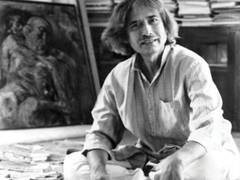
"Maestro whose distinctive strokes redefined Indian modern art": Bengal CM Suvendhu Adhikari mourns artist Jogen Chowdhury
Jogen Chowdhury (1939‑2026) rose from the village of Daharpara, now in Bangladesh, to become one of India’s most celebrated modern painters. His striking, gestural lines and vivid imagery reshaped the visual vocabulary of contemporary Indian art.
Educated at the Government College of Art & Craft in Kolkata and later at the École nationale supérieure des Beaux‑Arts in Paris, he fused traditional Indian motifs with a bold modernist approach. A long stint as curator of art at Rashtrapati Bhavan and his professorship at Kala Bhavana, Santiniketan, allowed him to mentor generations of artists.
Beyond the studio, he was instrumental in founding the Calcutta Museum of Modern Art and the Jogen Chowdhury Centre of Art, creating lasting platforms for artistic exchange. His public service continued as a Rajya Sabha member for the All India Trinamool Congress, adding a political voice to his cultural influence.
His work earned prestigious honors such as the Kalidas Samman, the Banga Bibhushan, and a showcase at the Havana Biennale. Iconic canvases like Tiger in the Moonlight, Story of Woman, Ganapati, Couple, Nati Binodini and The Silver Throne remain touchstones of his legacy.
His death leaves an irreparable void in West Bengal’s artistic soul, yet his bold strokes continue to inspire and define Indian modernism.