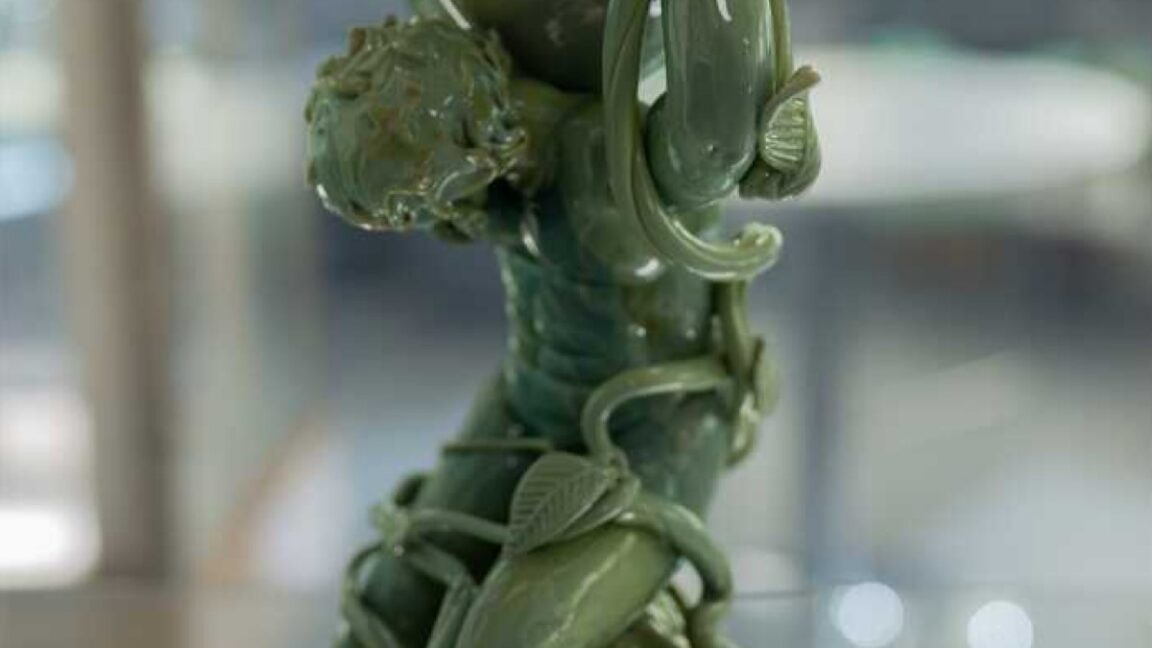
Sculpture recreates odd optical effects of famed Lycurgus Cup
Ancient Roman glassmaking reaches a new high point with a contemporary sculpture that reproduces the legendary color‑shifting magic of the Lycurgus Cup. The original 4th‑century vessel changes from green in reflected light to a deep red when back‑lit, a phenomenon only understood in recent decades as the result of gold‑ and silver‑based nanoparticles embedded in the glass.
After years of trial and error, researchers at University of Sheffield finally cracked the recipe. Glass scientist Lisa Hollands and Roman‑glass specialist Caroline Jackson fine‑tuned furnace conditions, oxygen levels and even a touch of sugar to coax a melt that mirrors the ancient dichroic effect. Their breakthrough glass, first shown at LightFest, proved that the elusive Roman formula could be reproduced reliably.
The scientific success quickly attracted the attention of UK glass artist Elliott Walker, winner of Netflix’s Blown Away competition. Walker sculpted a piece that fuses the mythic scene of King Lycurgus with the classical pose of the Farnese Atlas, replacing the globe with a cup that glows green in front light and turns red when illuminated from behind. The work is both a homage to antiquity and a showcase of modern photonic material design.
The sculpture will debut at the Millennium Gallery as part of the University of Sheffield’s Festival of the Mind, before finding a permanent home in the Turner Museum of Glass. Visitors will be able to experience firsthand the same shifting hues that dazzled Roman elites more than 1,600 years ago, now rendered through a blend of ancient craft and cutting‑edge science.