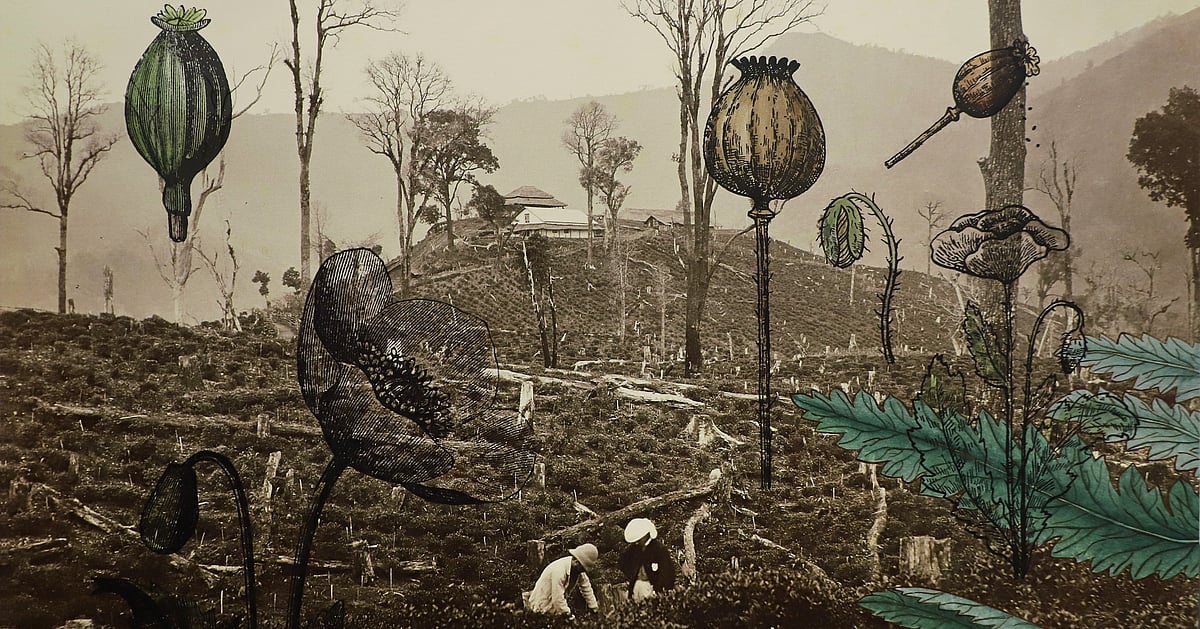
Sonia Mehra Chawla's art exhibition explores colonial history of tea and jute
Sonia Mehra Chawla's latest solo show turns two humble commodities—tea and jute—into portals for a tangled colonial past. By foregrounding the everyday cup and the sturdy fibre, the exhibition invites viewers to trace how empire reshaped landscapes, labour and the very language we use to name plants.
The show weaves painting, drawing, photography, installation and video into a layered narrative anchored in Bengal’s tea gardens and jute fields. Curatorial guidance from Nancy Adajania helps the work move fluidly between archival documents and contemporary visual strategies, creating a map that stretches from West Bengal to archives in the UK.
Central to the project is a critique of the scientific taxonomy that erased local expertise. The artist highlights how indigenous guides and healers supplied the knowledge that fed colonial botany, only to be sidelined by Latin nomenclature and profit‑driven cataloguing. This erasure becomes a visual motif, reminding us that plants were once lived‑in relationships, not mere inventory.
Yet the exhibition is not just historical. Its research‑driven installations speak to today’s debates over conservation, biodiversity and environmental justice, suggesting reciprocity as an alternative to extraction. The work asks who decides what is worth protecting and whose voices shape those decisions.
In the end, Sonia Mehra Chawla asks us to look again at the familiar tea leaf and the jute sack, to see them as carriers of labour, displacement and possibility. The show succeeds in turning dry archives into a sensorial experience that nudges the audience toward a more reciprocal way of inhabiting the natural world.