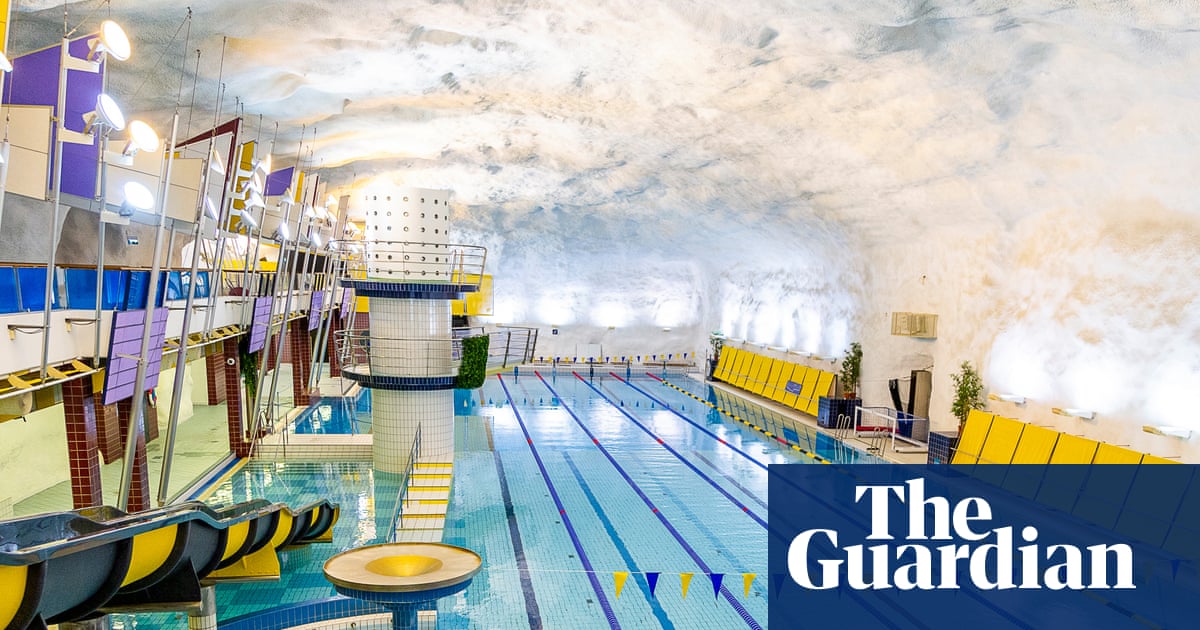
Taking a deep dive in Helsinki’s subterranean city
Beneath the Finnish capital lies a vast network of granite‑cut spaces that function as both everyday leisure zones and strategic infrastructure. The centerpiece is Itäkeskus swimming hall, a cavernous pool excavated from bedrock and opened in 1993, now welcoming around 400,000 visitors a year.
What makes Helsinki unique is the city’s deliberate decision to develop an entire underground city that can switch from peacetime commerce to wartime refuge. Over 200 miles (293 km) of tunnels link shopping malls, playgrounds, a go‑kart track and subway stations, and in an emergency each corridor can transform into a bomb shelter capable of sheltering up to 900,000 Finns.
Stepping into the pool feels like entering another world. Whitewashed walls rise like cliffs, while vibrant tiles in lavender, yellow and burgundy line the water’s edge. A low‑lit ceiling and a waterfall‑filled lifeguard tower create a moon‑like glow, and the space doubles as a gym, hot‑tub, steam room and sauna, all for a modest entry fee.
The subterranean experience extends beyond the pool. Nearby, the Amos Rex art museum pops up from concrete stalks, and the Temppeliaukio church nestles half‑buried in a massive rock mound, both reinforcing the city’s commitment to design that serves both culture and civil defence.
Together these sites illustrate how Helsinki reimagines urban living: a city that can accommodate daily life, artistic experimentation and, if needed, mass protection, all without sacrificing beauty.