Turner prize review - soulful cyborgs go into battle with a stack of massive Hobnobs
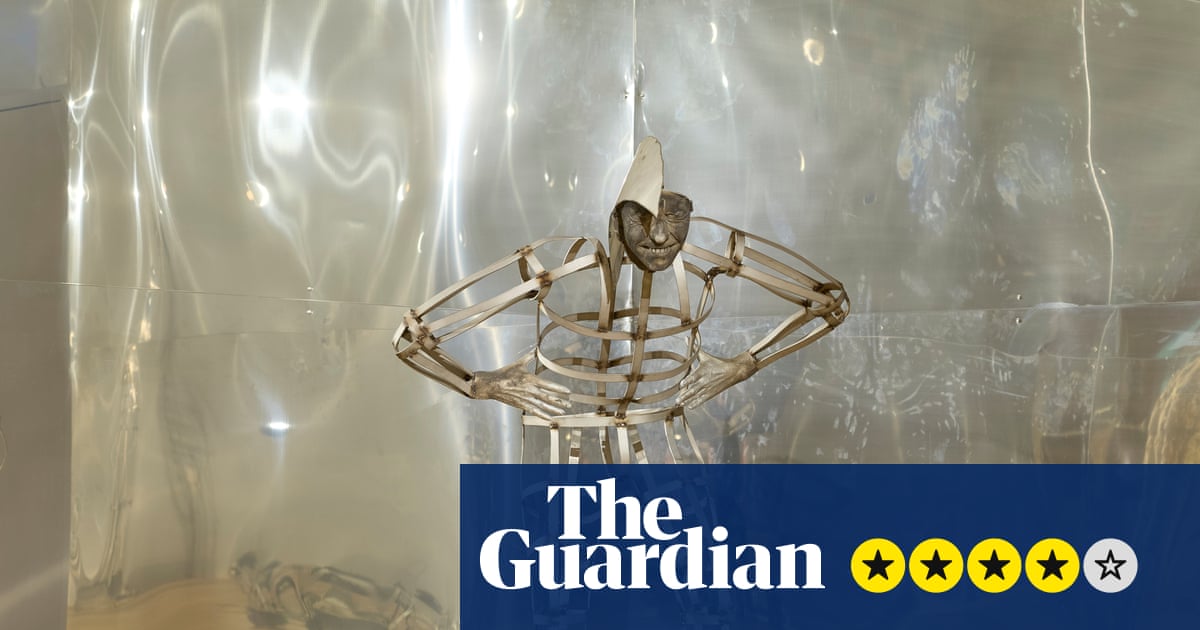
At this year’s Turner prize, the Middlesbrough Institute of Modern Art becomes a crucible for divergent visions of humanity and materiality. The show’s most arresting presence is Kira Freije’s isolated floor, where thirty‑three life‑size steampunk cyborgs stand in a mist‑filled wasteland, their human faces pleading for empathy amid hollow metal frames. The installation feels both apocalyptic and tender, suggesting that love and compassion are the only survivors in a ghost‑in‑the‑machine world.
Simeon Barclay offers a cinematic tableau that recalls immersive theatre, guiding visitors past a giant tabloid headline and through a neon‑lit labyrinth toward a living‑room‑like core. A recorded voice recites a mournful poem about a working‑class father, creating a visceral but slightly ambiguous narrative of lost masculinity.
In contrast, Marguerite Humeau embraces a baroque alchemy, filling two rooms with bizarre sculptures that incorporate beeswax, walnut, glass and even wasp venom. A high‑pitched soundscape trails the viewer, turning the experience into a psychedelic wander through eccentric material experiments.
Tanoa Sasraku presents a more restrained protest, arranging glass paperweights that contain dark viscous liquids as a commentary on the oil industry. The subtlety of the work limits its emotional impact, yet it adds a necessary political thread to the exhibition.
Together, the four shortlisted artists generate a lively debate about the future of contemporary art. While Freije’s dramatic vision may dominate the conversation, Barclay, Humeau and Sasraku each contribute distinct personalities that make this Turner prize a rare moment of genuine competition and public engagement.